

The Fears Hernia Patients Never Say Out Loud
In fifteen years of surgical practice, I have noticed something.
Patients ask me about recovery timelines, about mesh, about recurrence rates. They ask about hospital stay and return to work. They ask careful, practical questions.
What they almost never say out loud is: I am scared.
But the fear is there. I see it in how long people wait before coming in. I see it in the questions they ask, and the questions they do not. I see it in patients who have known about their hernia for months, sometimes years, and kept finding reasons to postpone.
This blog is for those patients. The fear is real, it is common, and it is worth talking about.
The hernia that gets ignored
One of the most common things I hear when a patient finally comes to see me is: I knew about it for a while.
Hernias are often easy to hide. A small bulge in the groin or lower abdomen, covered by clothing, not visible to anyone else. It comes and goes. It may not hurt. Life is busy. The appointment gets pushed.
Some patients feel embarrassed. Many hernias are located close to the genitals, and that location alone is enough to make people uncomfortable asking questions, uncomfortable even describing the problem to a doctor. So they do not.
This is something I want to say plainly: there is nothing unusual about this. A hernia in the groin is one of the most common surgical conditions in the world. I have spoken about it with thousands of patients. There is no version of this conversation that is embarrassing to have.
The only version that causes problems is the one that does not happen at all.
The fears patients carry but rarely name
When I ask patients directly what is holding them back, several things come up. Most of them are not spoken spontaneously. They need to be asked.
Fear of the surgery itself
The idea of being cut, however small the incision, is frightening for most people. It does not matter that laparoscopic hernia surgery involves incisions of less than a centimetre. The idea of surgical instruments inside your body is confronting.
This fear is entirely reasonable. It does not mean you are weak or irrational. It means you are human.
What I tell patients is this: the incisions are small, the procedure is precise, and you will be asleep. You will not feel it, and you will not remember it. The recovery is the part you experience, and that is far more manageable than most people expect going in.
Fear of anaesthesia
Anaesthesia is one of the most common fears patients mention when asked directly. The fear of not being in control, of not knowing what is happening to your body, of not waking up.
General anaesthesia for hernia surgery is routine. It is administered and monitored by a qualified anaesthesiologist throughout the procedure. The drugs used today are well understood, the monitoring is continuous, and the risks, while real, are very low in patients who have been assessed properly before surgery.
If anaesthesia is a specific concern for you, say so during your pre-operative assessment. The anaesthesiologist will walk you through exactly what to expect. That conversation helps.
Fear of pain
Patients imagine waking up in significant pain. That fear is usually worse than the reality.
Post-operative pain after laparoscopic hernia surgery is managed with standard pain relief. Most patients describe the discomfort in the first few days as soreness rather than acute pain. It is real, and it needs medication, but it is not the experience many patients are dreading.
Being honest about pain levels before surgery is important to me. I do not minimise it. But I also do not want patients to postpone necessary treatment because they have built up a picture of suffering that does not match what most people actually experience.
Fear of cost
The cost of surgery is a real concern for many patients and one that is rarely raised directly in a consultation. Patients worry about hospital bills, time off work, and whether the expense is worth it for a problem that is not currently causing them daily distress.
This is a legitimate consideration and worth discussing openly. What is also worth knowing is the cost of not having surgery: a hernia that grows over time, a repair that becomes more complex and more expensive, or an emergency that requires urgent intervention at much higher cost and risk.
If cost is a barrier to care, say so. There are options worth discussing.
Fear of what happens near the genitals
Inguinal hernias, the most common type, are located in the groin, close to the testicles and the structures that supply them. Patients, particularly men, are often anxious about what surgery in this area might affect.
The structures around the testicles, including the vas deferens and the blood supply, are identified and carefully protected during inguinal hernia repair. Injury to these structures is a known risk that surgeons are specifically trained to avoid.
If this is a concern, ask your surgeon directly before the operation. A clear explanation of what is protected and how is part of the pre-operative conversation.
Fear of something going wrong
Many patients come in having spent time reading about hernia surgery online. What they find are threads from people who had difficult experiences: complications, persistent pain, recurrence, revision surgery.
Online forums overrepresent bad outcomes. People who had straightforward surgery, went home in two days, and returned to their lives without difficulty do not write about it on the internet. The ones who struggled do.
This does not mean complications never happen. They do, and they are worth understanding. But they are not the typical experience, and they should not be treated as the expected one.
What actually helps before surgery?
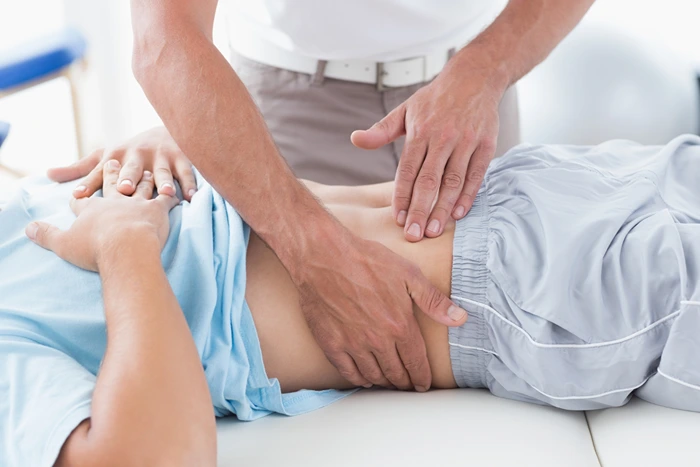
Fear is managed better with information than with reassurance alone. Here is what I have seen help patients feel more settled going into an operation.
Before your consultation
- Write down every concern, however small or embarrassing it seems. Bring the list.
- Include fears about anaesthesia, about the location of the hernia, about cost, about what you read online. All of it is fair to raise.
- Ask your surgeon to explain what will happen step by step, in plain language.
During the consultation
- Bring a family member if that helps. A second person hears things you might miss when anxious.
- Ask about the specific technique planned, and why.
- Ask what is normal to feel in the first week, so you are not alarmed by expected discomfort.
- Ask what would prompt you to call the clinic after surgery.
Before you decide
- Ask to speak with a patient who has had the same procedure. Many surgeons who are confident in their work will facilitate this.
- If something was not answered clearly, ask again. A good surgeon will not make you feel that the question was unreasonable.
A word on waiting until it gets worse
The most common result of unaddressed fear is delay. And delay, as I have explained in other posts in this series, has consequences.
A small hernia is easier to repair than a large one. A planned surgery is safer than an emergency one. The window where the surgery is simple and the recovery is fast is a window that narrows over time.
Fear that leads to a timely, well-prepared operation is fear that has served its purpose. Fear that leads to years of avoidance is fear that has worked against you.
What I want patients to know?
The fear you feel is not a sign that you should not have surgery. It is a sign that surgery is a significant thing, and that you are taking it seriously. That is appropriate.
What matters is that the fear does not make decisions for you. Information does. Conversation does. A proper assessment of your specific hernia and your specific situation does.
Bring your fears to the consultation. That is what the consultation is for.
One last thing
In all my years of practice, I have never had a patient say after surgery: I wish I had waited longer.
Almost every patient says some version of the same thing: I should have come sooner.
Whatever is keeping you from making the appointment, it is worth examining. And if fear is part of it, it is worth saying so. Not to anyone in particular. Just to yourself first.
Then book the appointment.


